
MULCHER WITH MOVABLE HAMMERS OR FIXED TEETH FOR EXCAVATOR: HERE ARE THE DIFFERENCES
Flail mower with movable hammers or fixed tines? The mulcher is a widely used and appreciated work tool in agricultural as well as forestry contexts. The care of forest soil, uncultivated or neglected areas, the cleaning of riverbeds, streams and canals, and also of areas close to railway lines, requires the use of mulchers. These are also indispensable in case of floods, disasters, landslides, to clear roads or areas, in favor of the passage of vehicles, people and emergency vehicles.
As can be guessed, mobile hammer trenches for excavators are tools that make versatility their prerogative. However, there are several species of them, including those with movable hammers and those with fixed teeth.
Let’s anticipate that the main difference between flail mowers with movable hammers and fixed-tooth flail mowers lies in the type of use. To understand this is to better guide the choice of the best flail head.
Mobile hammer mulcher for excavator
Their wear and tear depends on the type of material being processed and the cutting height set, depending on the work being done. To extend their service life, it is possible to opt for movable mallet cutters whose cutting area is coated with surface treatments capable of preserving the sharpness from premature wear over time.
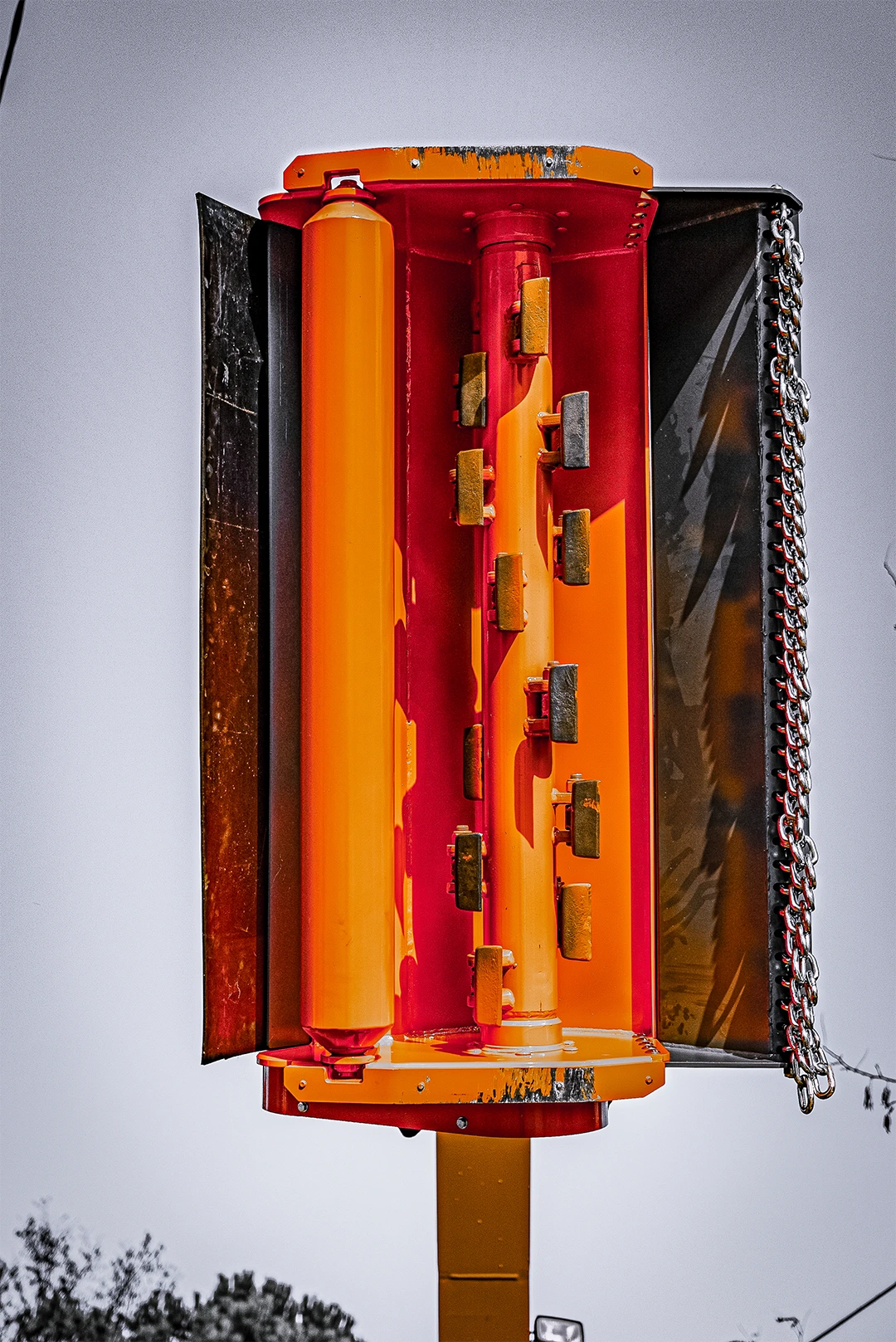
Fixed tooth mulcher for excavator
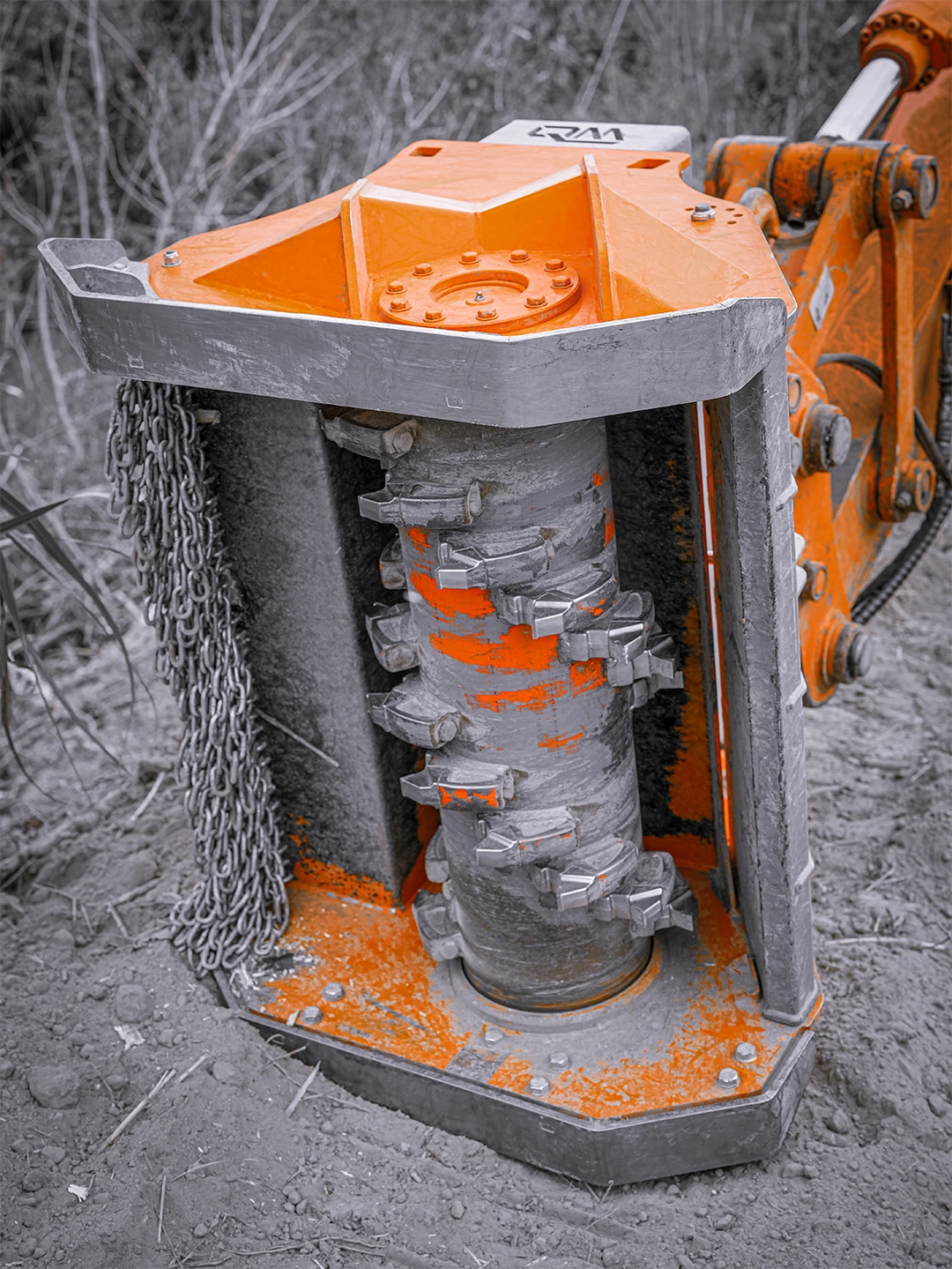
Characteristic movable mallet trenches
- Operation: the hammers are called “mobile” because they move independently on a rotor shaft. These “hammers” strike the material repeatedly, shredding and breaking it into small pieces.
- Materials to be processed: movable sledgehammers adapt better to different textures and medium to small sizes, allowing both soft and somewhat harder materials to be shredded.
- Use: the mobile mallet excavator mul cher system is most effective for shredding remains from pruning, grass, crop residues, and various kinds of plant waste . In addition, such a mulcher can also handle fibrous and wet materials.
- End result: the use of hammers in a mobile mallet shredder produces a finer, more homogeneous shredded material that could suit composting or other uses.

Considerations on mobile mallet trenches
Verification of the fixed tooth mulcher
- Operation: fixed teeth are used that do not move individually, but in solid with the rotor.
- Materials to be processed: a fixed-tooth mulcher is more suitable for processing more difficult materials provided the equipment is installed on a high-powered vehicle.
- Use: Fixed tooth cutting is commonly chosen for shredding wood, branches and similar materials, especially when trying to obtain a larger finished product or for specific applications.
- End result: the shredding appears coarser and less homogeneous when compared with material shredded by a mobile hammer shredder. This is not necessarily a negative aspect, but it always depends on what is desired to be achieved.

Considerations on fixed-tine trenches
Conclusion
The choice between an excavator mulcher with movable hammers and a fixed-tooth mulcher depends mainly on the type of material to be processed and the desired result. If finer and more versatile shredding is desired, the mobile hammer mulcher often proves to be the best choice. If you work primarily with harder materials and prefer a different cut, the fixed-tooth mulcher may be more appropriate.