
SAFE MULCHER MOUNTING ON EXCAVATOR: 5 MISTAKES TO AVOID
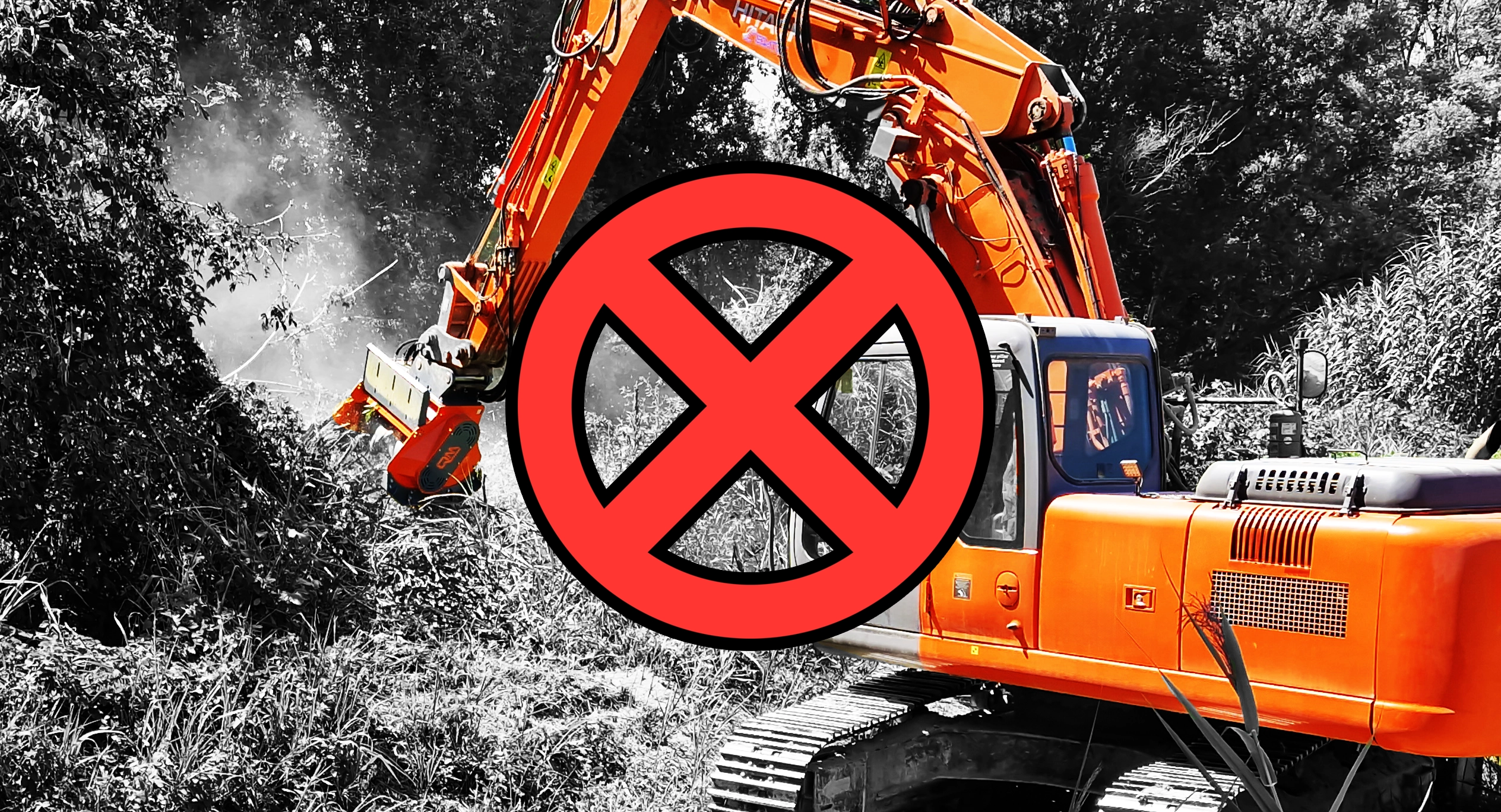
Safe installation of a mulcher on the excavator is a critical operation that requires attention, preparation, and adherence to safety procedures. Proper installation ensures not only optimal operation of the equipment, but also greatly reduces risks to operators and people in the work area.
However, mistakes often occur that can lead to accidents, equipment damage, or operational inefficiencies. These, are in most cases due to actions of superficiality, carelessness, and lack of preparation, on the part of those doing the work.
Regardless of what is indicated below, there is a very common mistake that could result in irreparable engine problems. In fact, those who are perhaps not well-versed in the subject tend to connect the hydraulic hoses of the mulcher before setting up the machine’s system. Connecting the system without having set the free discharge and checked flow rate and back pressure can cause serious engine damage. So be careful with this operation.
Here, then, are the five most common mistakes to avoid when mounting the mulcher on the excavator, offering practical tips for safe and effective installation.

1. Lack of preparation and planning for the intervention.
In many cases, the assembly of the mulcher is carried out without proper preparation or without having properly planned the operation. This can lead to emergency situations, inadequate equipment or risk of accidents. Beginning installation without having read the manual and checked the compatibility of the mulcher, taking it for granted that it is ready for use, is a common and very common mistake.
In addition, Failure to plan the operation may result in the use of the wrong tools, lack of proper lifting devices, or failure to check the condition of parts (mulcher and excavator). It is advisable to conduct a proper assessment of the work area in order to avoid exposing personnel to unnecessary risks.
How to avoid it
- Before starting, carefully read the instruction manual of the mulcher and excavator.
- Conduct a preliminary inspection to check the condition of equipment and plan operations.
- Assess the work area, making sure it is stable, free of obstacles and safe.
- Prepare all necessary safety tools and equipment, such as harnesses, lifting devices and safety signs, as well as personal PPE (shoes, helmet goggles).
- Organize the work team, assigning clear roles and specific responsibilities.
2. Use of inadequate or noncompliant lifting equipment
Not infrequently, the use of unsuitable, uncertified or worn-out hooks, cables or lifting accessories is one of the most serious mistakes during assembly.
Inadequate lifting devices can break under traction or under load, causing accidental fall of the mulcher, damage to the equipment or injury to operators and people on the site.
How to avoid it
- Use only certified lifting devices that comply with current regulations (e.g., UNI, EN), with capacity appropriate for the weight of the mulcher and working conditions.
- Check for wear and tear, locate any cracks or deformation of hooks, cables and other accessories before each use.
- Ensure that devices are installed properly, with secure anchors and no risk of slippage.
- Train operators on the proper use of lifting devices and management of lifting operations.
3. Mounting without blocking and properly stabilizing the excavator
It happens more frequently than one might think that operations concerning the mounting of the mulcher on the excavator are carried out under “boundary conditions” that do not involve the proper immobilization of the excavator or the activation of the appropriate outriggers. It should also be considered that sometimes the operation is carried out on uneven surfaces as well.
An unstabilized excavator can move during operation, leading to loss of control, falling equipment, or accidents. Lack of stabilization can also lead to structural damage to the equipment or the excavator itself, and bring serious risks to the people present. An unstabilized machine is out of control.
How to avoid it
- Place the excavator on stable and level ground.
- Use excavator skids or outriggers, if available, to increase stability.
- Lock the boom and bucket travel ramps, if any, to prevent unwanted movement.
- Make sure the excavator is powered and the brakes are on during assembly.
- Follow the manufacturer’s procedures for securing and stabilizing equipment.
4. Incorrect attachment of the gunwale to the excavator.
Failure to use the attachment points provided by the manufacturer or to properly tighten brackets, bolts or fasteners is among the most common mistakes when mounting the mulcher. Likewise, failing to properly lock the mechanical attachment to the excavator boom and neglecting to properly insert pins and safety catches is dangerous.
Improper attachment can lead to the mulcher becoming detached during use, resulting in damage to the equipment, risk of accident or injury to persons or property.
How to avoid it
- Strictly follow the assembly manual instructions provided by the manufacturer of the mulcher and excavator.
- Use original and certified quality bolts, brackets and accessories.
- Tighten all bolts and fasteners with appropriate tools, observing the indicated tightening torques.
- Visually and manually verify that all fastening points are properly installed and secure.
- Make periodic checks during use operations to ensure that the fastening remains stable.
- Lubricate the parts periodically and follow the correct disconnection procedure when necessary to “unplug” the mulcher.
5. Lack of verification and testing after assembly
Completing the operation of mounting the mulcher on excavator without conducting a complete inspection and testing of the equipment is a superficial action that could give rise to unnecessary risks.
Failure to conduct a final test may miss problems with fixing, alignment, or operation that could occur during use, leading to risk of accident or damage. The machinery should not be placed under work stress immediately.
In addition, Failure to plan the operation may result in the use of the wrong tools, lack of proper lifting devices, or failure to check the condition of parts (mulcher and excavator). It is advisable to conduct a proper assessment of the work area in order to avoid exposing personnel to unnecessary risks.
How to avoid it
- After mounting the mulcher, perform a detailed visual inspection of all components and attachment points.
- Conduct a short test run by slowly moving the excavator arms to check that the mulcher is properly engaged and working.
- Verify that all safety devices are on and working.
- Document the assembly operation, noting any checks and verifications performed.
- Before starting operational work, conduct a trial run in a safe area with qualified personnel present.
Conclusion
Mounting the mulcher on the excavator is a delicate operation that requires attention, preparation, expertise and adherence to safety regulations. By avoiding the five main mistakes described in this article, such as lack of planning, use of inadequate lifting devices, mounting without stabilization, improper attachment, and lack of post-mounting verification, the likelihood of accident risk can be significantly lowered, reducing equipment damage and operational inefficiencies.
Workplace safety is crucial and is a responsibility. Investing in training, mandating the use of certified equipment in accordance with procedures, is the best way to ensure a safe and productive work environment. Before any work, consult the manufacturer’s instructions, take safety measures and, if necessary, engage qualified personnel. This is the only way to ensure safe and reliable mounting of the mulcher on the excavator.