
MALLET CHOPPERS, HAMMERS OR KNIVES: ARE THEY THE SAME THING? HERE ARE THE TECHNICAL, FUNCTIONAL AND DURABILITY DIFFERENCES
First, it should be specified that in this article we are talking about a nonautonomous mulcher, that is, an attachment that must be installed on an operating machine through a mechanical connection. Its operation, therefore, is dependent on the hydraulic system of the excavator or skid loader.
After this introduction, we can immediately state that a mallet mulcher and a hammer mulcher are the same thing: the two nomenclatures should be used alternatively of each other as synonyms, although there are those who mistakenly believe that there are differences. Different, however, is the concept of a knife mulcher.
The real difference, then, is between a mallet (or hammer) mulcher and a knife mulcher.
When to use the mulcher
To best understand the technical and functional differences between the two types of mulchers, it is essential to understand their uses. The tool is often used in forestry and forestry as well as in the agricultural sector. In fact, it is useful for clearing land, mowing grass and shrubs where there are uncultivated and neglected areas, cleaning riverbeds, and disaster response.
The mulcher is designed to work not only grass, but also messy and abandoned land with climbing plants, shrubs, brambles, bushes, branches and bushes.
It is therefore important to determine the working conditions, the state of the art of the surface and the environment in which to operate, before choosing the best mulcher.
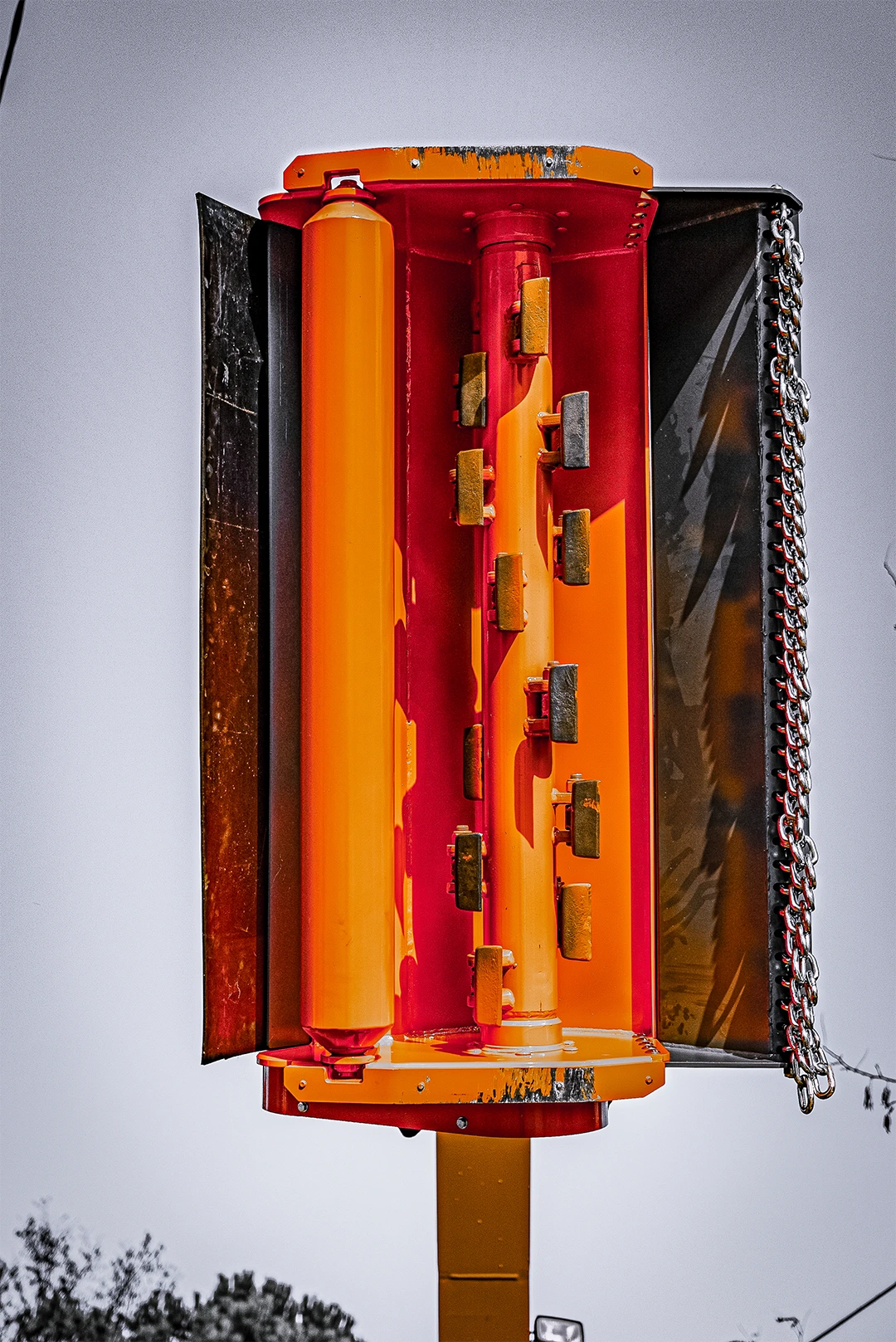
Differences between mallet mulcher and knife mulcher
Before explaining the differences between the two types of mulchers, it should be clarified that in essence the operating principle is the same. Both the hammer mulcher and the knife mulcher take motion from the machine to which they are mechanically connected.
In addition to form, the main difference lies in use.
The hammer or mallet mulcher
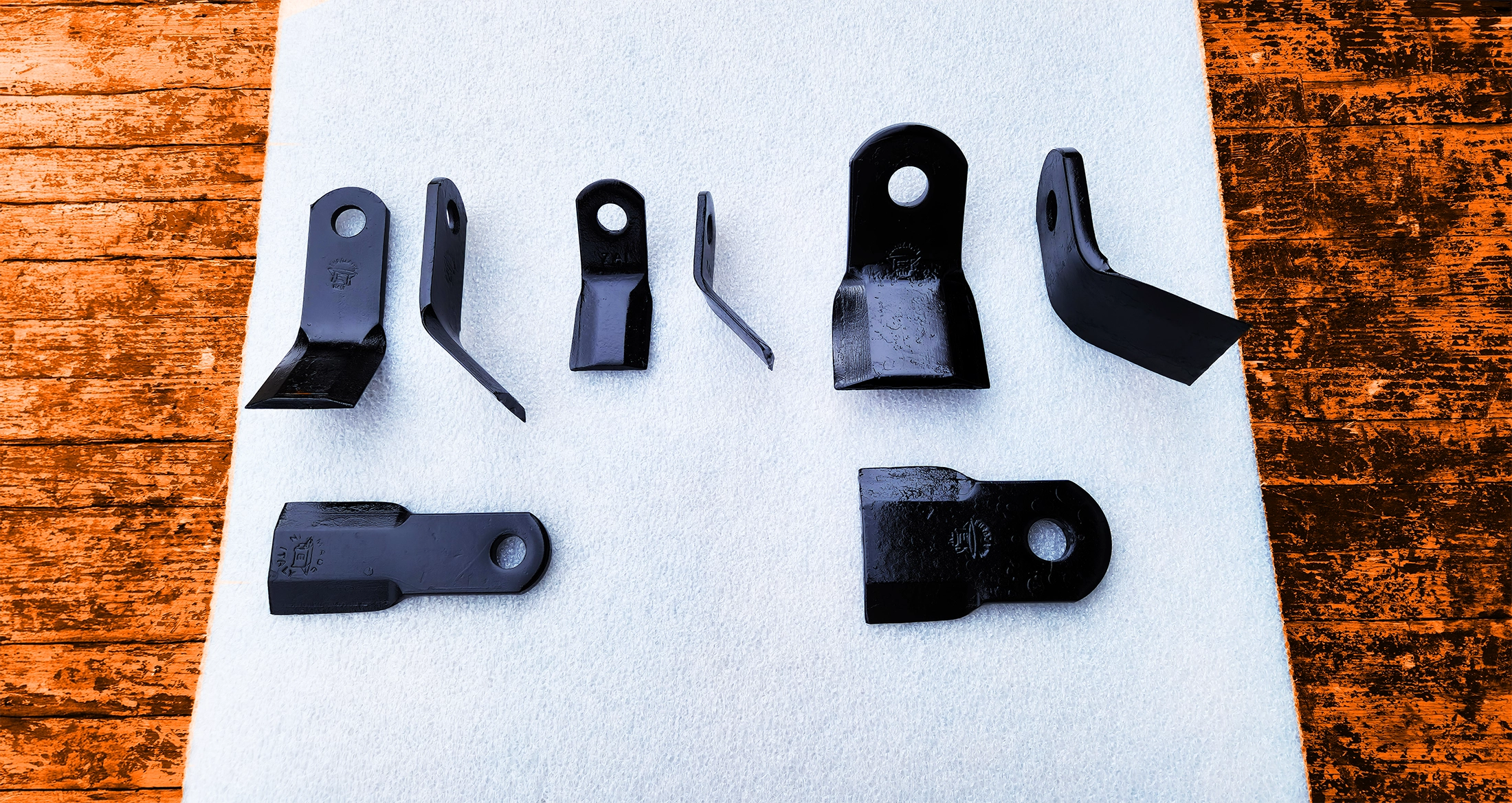
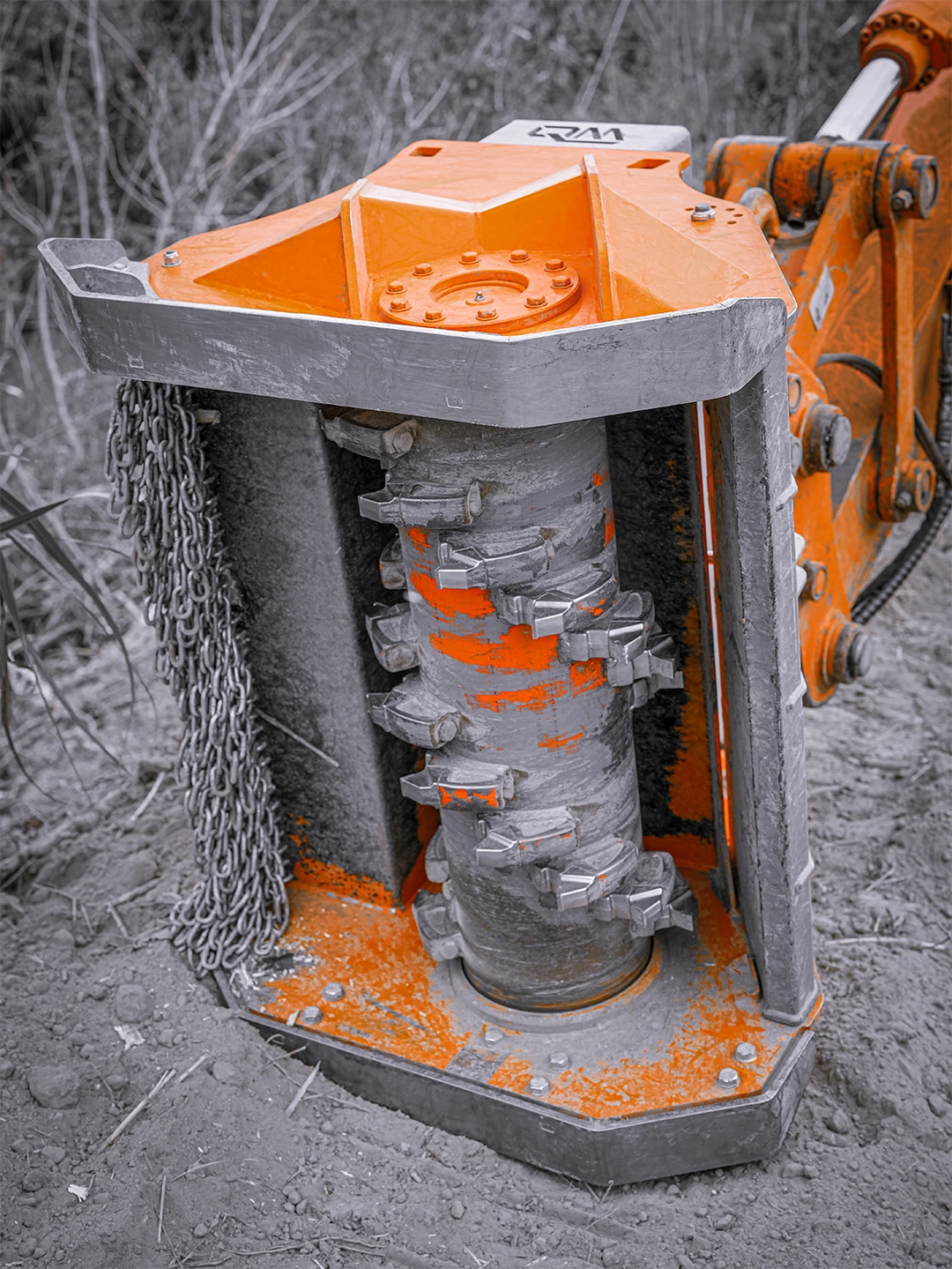
The hammer or mallet mulcher is used to chop small branches, shrubs, tree cutting and pruning residues, reeds, and to operate mainly in forests and fallow land where vegetation has taken over. The result is a woody compost formed by the cutting residues, including those of medium to fine size. The construction of a hammer mulcher is robust since it must go to support the cutting of more difficult details than, for example, grass. The cut, in fact, appears coarser than that provided by the knife variant, but no less precise.
Versatility is maintained and there are many who prefer this type of equipment, especially if one does not know in advance the characteristics of the terrain in which one is going to work. Although the hammer mulcher is not designed to work on soils with debris, it still manages these best. Not surprisingly, the hammer mulcher is chosen in 90 percent of cases precisely because of its versatility of use, leaving the option of knives only in the case of mowing grass or bushes.
It is precisely the strength of construction, returns only theoretically higher durability to the hammer mulcher. In fact, this varies depending on the work to be done, since, operating on land that is often uncultivated and “polluted” with debris and logs, the work is much more burdensome than with the hammer mulcher.
The knife mulcher
The knife mulcher is used in a prevalently simpler context, to maintain green areas such as lawns, grounds and parks where there is a need to mow grass and small bushes. In this case, a rather fine end product is obtained that will tend to decompose in the appropriate composting systems. The cut is certainly more precise and undoubtedly the use is a little more limited, making it preferable on tidier areas. Knives can be more damageable than mallets, which appear to be sturdier and more solid, less delicate. The knife mulcher also works for cutting light vegetation, such as bushes, fine-stemmed plants, and small branches. If used properly, it is easier to predict the wear and tear on the blades, while if used in an unsuitable environment its life span will be less than expected.
Depending on the terrain and area, the two types of mulchers are also functional in cleaning plantations such as olive trees, orchards and vineyards.

Which mulcher to choose
The answer to this question is simple: it depends on the type of soil and the environment in which you will be working. An area that requires precision, with grass or even light, fine vegetation with bushes, on debris-free ground, requires the use of a knife mulcher.
On the other hand, where debris, uncultivated vegetation, challenging spaces, shrubs (even large caliber), small logs, brambles are present, here the mallet mulcher can really return great satisfaction, without losing precision.
The QM ranges: the best mallet and knife trenchers

QM offers a comprehensive overview to provide customers with a range of quality hammer and knife trenches. Constant research, made by development and innovation, enables the company to provide the best answer to even the most demanding customer. QM provides the option of equipping the mulcher with both hammers and Y knives.
Below is the detail of the options broken down by operating machinery.
For excavator:
- SE SERIES and SL with operating machine from 0.8 up to 4 tons
SM SERIES
With operating machine from 3.5 up to 8 tons- SR SERIES With operating machine from 4 up to 14 tons
For Skid loader or Wheel loader, front-mounted mulcher:
Contact us to better understand the potential of our trenchers and make a functional choice to better be able to operate in different areas of interest, from agriculture to forestry, from green maintenance to land reclamation.