
HOW TO REPLACE THE MALLETS ON A MULCHER: STEP-BY-STEP GUIDE (WITH PHOTOS)
Trenches are machines that are of great importance to the entire agricultural sector and in green maintenance operations.
Plant residues and other woody materials are processed with this equipment, with the aim of shredding them to reduce their size and prepare them for further processing or disposal. The mallets, as well as the knives in the alternative variant, are wear parts that require maintenance or even replacement. Doing so ensures full cutting efficiency and increased safety while working.
In the following paragraphs, we will try to provide a guide to replacing the mallets of a mulcher, pointing out some practical tips, which are useful in safely approaching the operational process.
Why it is important to replace hammers
Hammers, also called flail mallets, are components subjected to continuous stress that leads to wear and tear on parts.
Continued use will cause them to lose their cutting capacity, even leading to deformation and compromising the quality of the work. Operating with heavily worn hammers not only leads to disregarded and rough results, but also increases the risk of machinery damage. Worn or damaged hammers can lead to:
- Reduction in cutting capacity
- Decline in operational performance
- Excessive noise
- Possible presence of annoying abnormal vibration
- Probable sudden failure of some stressed parts
- Damage to components
- Safety issues for the operator
- Increased time required to do the work
For these reasons, it is a good idea to regularly check the condition of the hammers and replace them if necessary, following the manufacturer’s directions
What does it take to replace the hammers of a mulcher?
Before starting the work of replacing flail hammers, it is best to have prepared the necessary tools and materials, starting with the necessary spare parts. The necessary wrenches for disassembling and reassembling the cutting parts, pliers and hammer (preferably made of rubber or plastic so as not to ruin the affected parts), protective equipment, a lubricating oil (better penetrating spray for unlocking bolts), and the machine’s operating manual should all be available to the operator.
The work must be performed with the engine off, cold and without moving organs, thus lowering the likelihood of hazards. Fundamental is positioning, which must be in full stability, maintaining a “solid” safety situation.
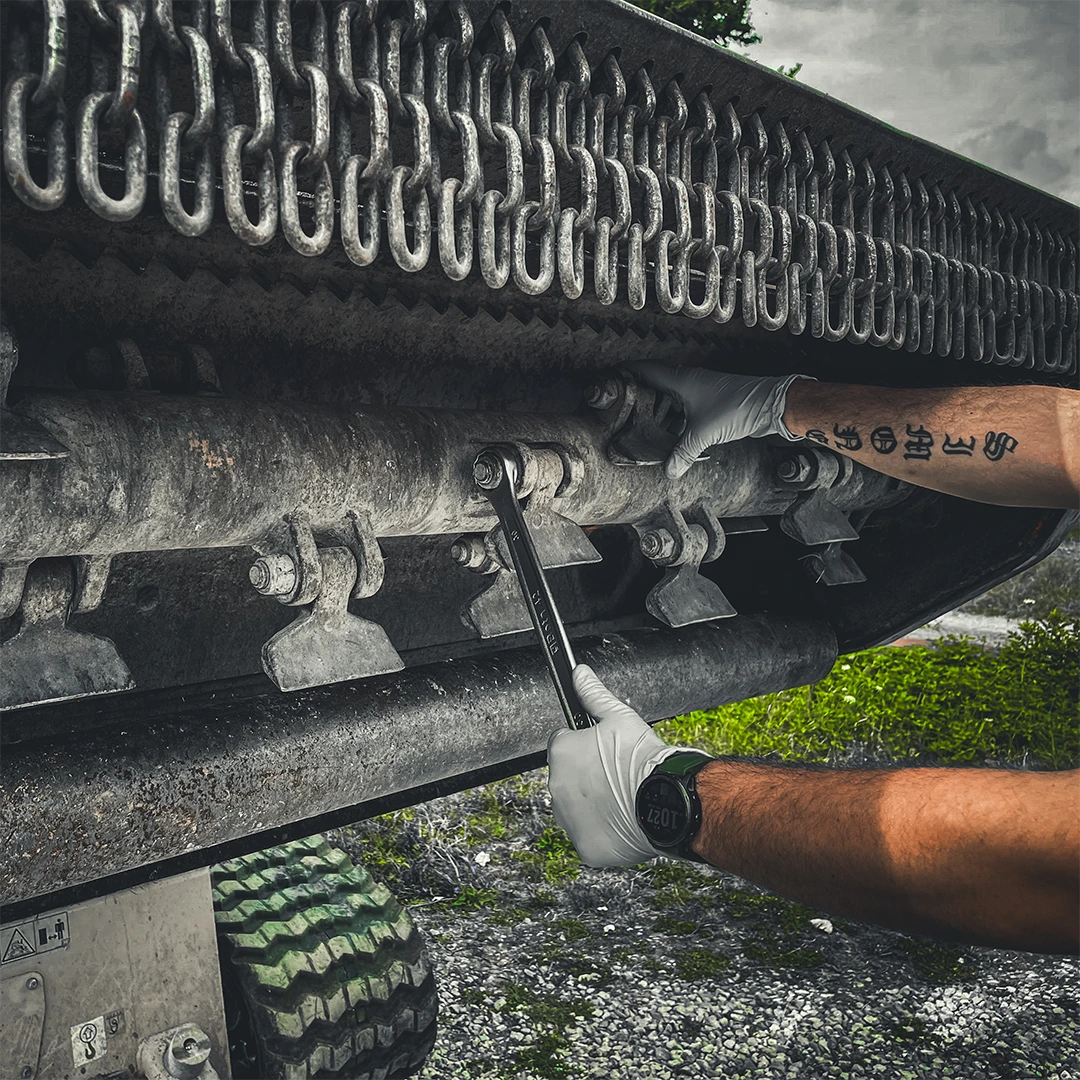
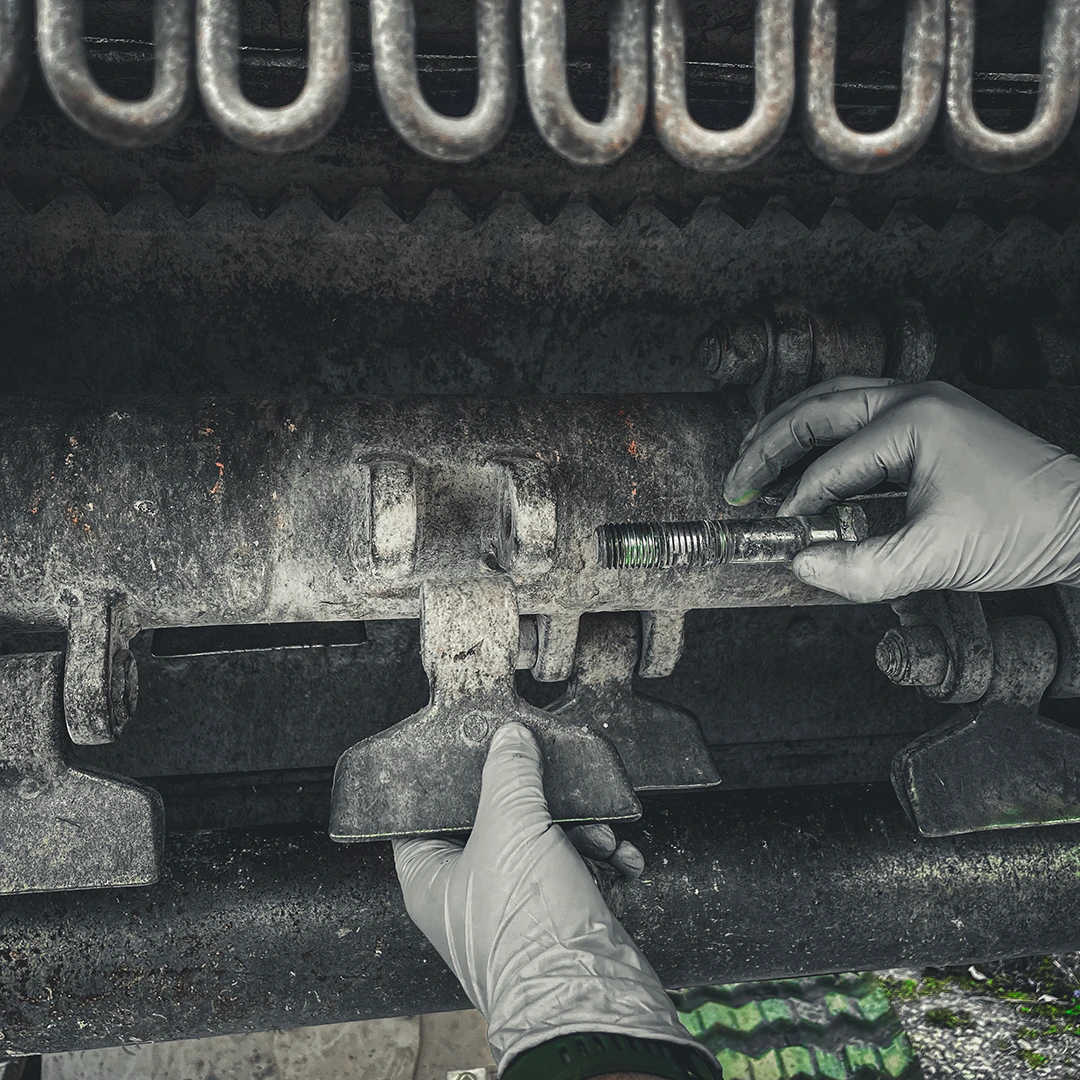

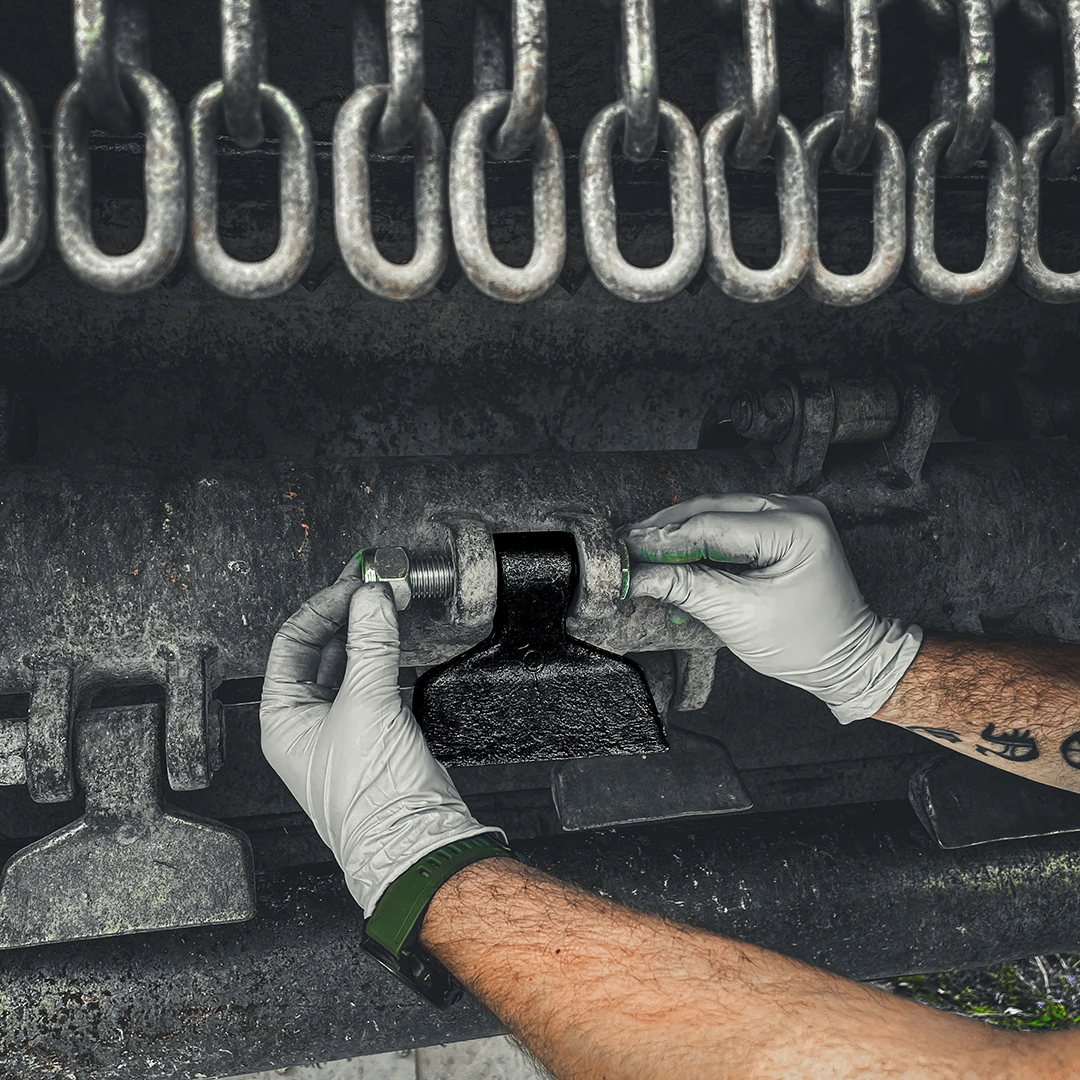

Detailed procedure for replacing clubs
Once these premises are made clear, it becomes possible to begin the work of replacing mallets on the mulcher. Here is the step-by-step guide to be able to operate safely and efficiently.
How to replace the knives of a mulcher
- Put the mulcher in a safe condition: lift and lock the machine firmly.
- Always work with the machine off and depressurized.
- Wear mandatory PPE (gloves, goggles, safety shoes).
- Prepare the necessary tools for disassembly.
- If there is a protective cover, it should be removed by setting aside screws and bolts to avoid losing them.
- Check the wear condition of the cutting elements and take a general look.
- Remove the worn clubs one at a time by unscrewing the supporting screws.
- Clean dirty parts with work debris.
- Check the condition of the knife holders and the absence of ovalization.
- Install the new hammers and screws in the same direction, following the correct sequence.
- Use only new bolts and replace nuts at every change (even if apparently undamaged).
- Hand-tighten screws and bolts evenly so that no tension is created that could generate imbalance. Only at the end should all the fasteners be tightened, observing the prescribed torque value (from the manual).
- Check that all screws are tightened properly.
- Verify that each club can move unimpeded.
- Do not mix different tools: mount only original mulcher hammers of the same type.
- Conduct an initial test at low speed.
Conclusion
The replacement of hammers on a forage harvester is a crucial operation for the life and efficiency of the machinery. It is also the basis for being able to enable higher operator safety. Working with new or fully efficient hammers means doing quality work in less time.
Because of the way the operations have been described, it is possible to approach this maintenance task with confidence and safety, cutting downtime and preventing damage. The instructions in the manufacturer’s instruction manual are of great help and are a reference to be considered at all times. In addition, it is advisable to perform periodic checks for optimal operation. With proper maintenance, your mulcher will be with you for a long time, delivering reliable, quality performance over time.