
BUYING GUIDE: 10 QUESTIONS TO ASK YOURSELF BEFORE BUYING AN EXCAVATOR MULCHER
When a purchase is to be made, in general, it is useful to understand in advance whether “there are the right papers” to be able to make it and whether really that good can solve a problem or supply a need. The expense and functionality of what you want to purchase depend on it.
If this argument makes logical sense for any industry, all the more reason it comes in handy when you have to decide what kind of excavator mulcher to buy.
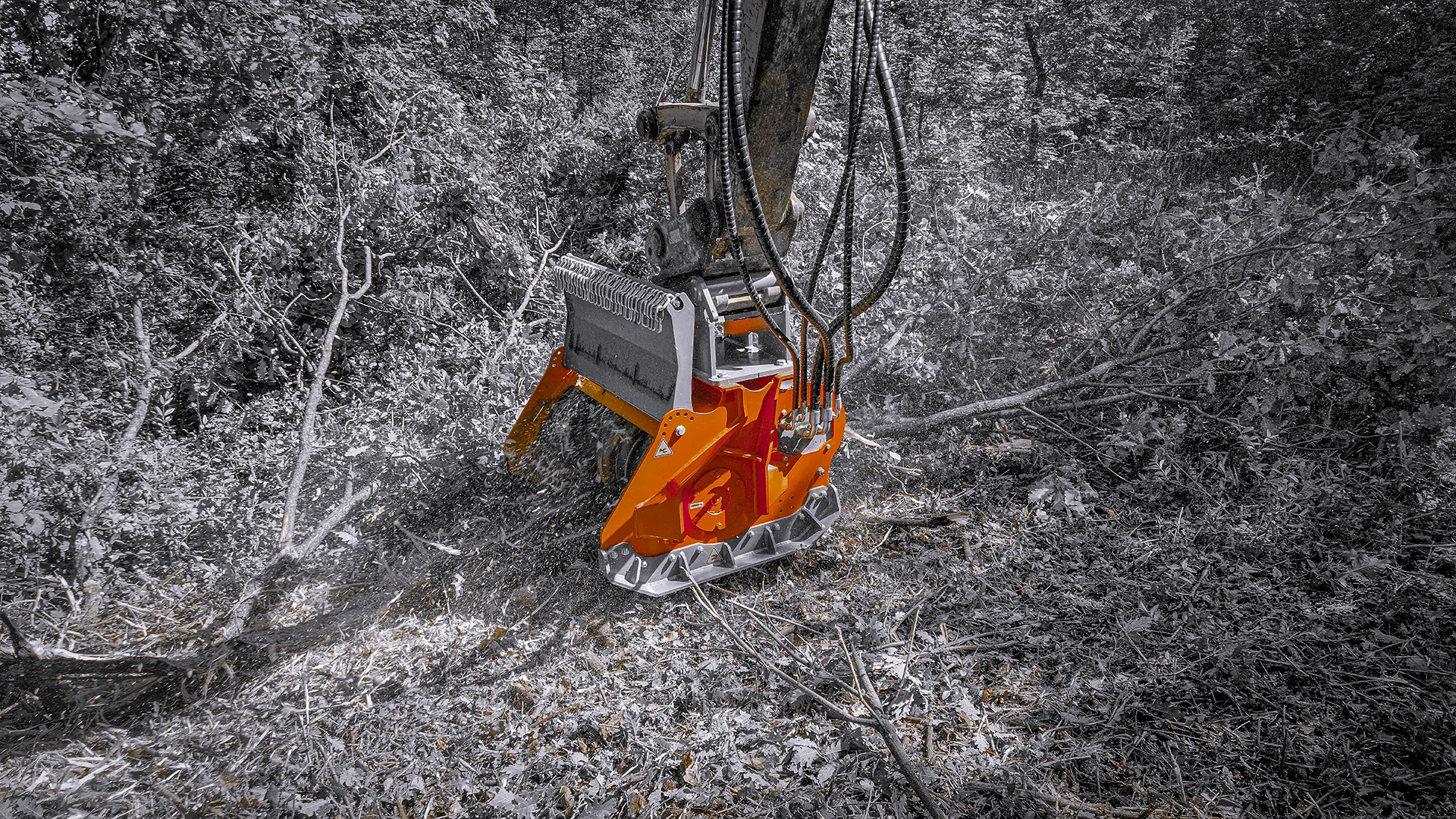
Ten key questions before buying an excavator mulcher
First, it is advisable to know well the characteristics of the excavator itself, to understand whether that mulcher you are interested in is compatible and suitable for mounting on the machine you already own. But there are other things to analyze as well.
Here are ten useful questions to ask yourself before buying an excavator mulcher.

What are the weight and hydraulic capacity of my machine?
There is no single type of mulcher on the market. For this reason it is necessary to compare the characteristics of these with those of the excavator on which, one, it will later have to be installed. Two data should be well in mind: the installable weight allowed by the machinery and the hydraulic flow rate. These two parameters are binding because they are specific to the excavator. The mulcher will have to be purchased accordingly, so that it can be adaptable. The excavator’s booklet should state precisely these values.
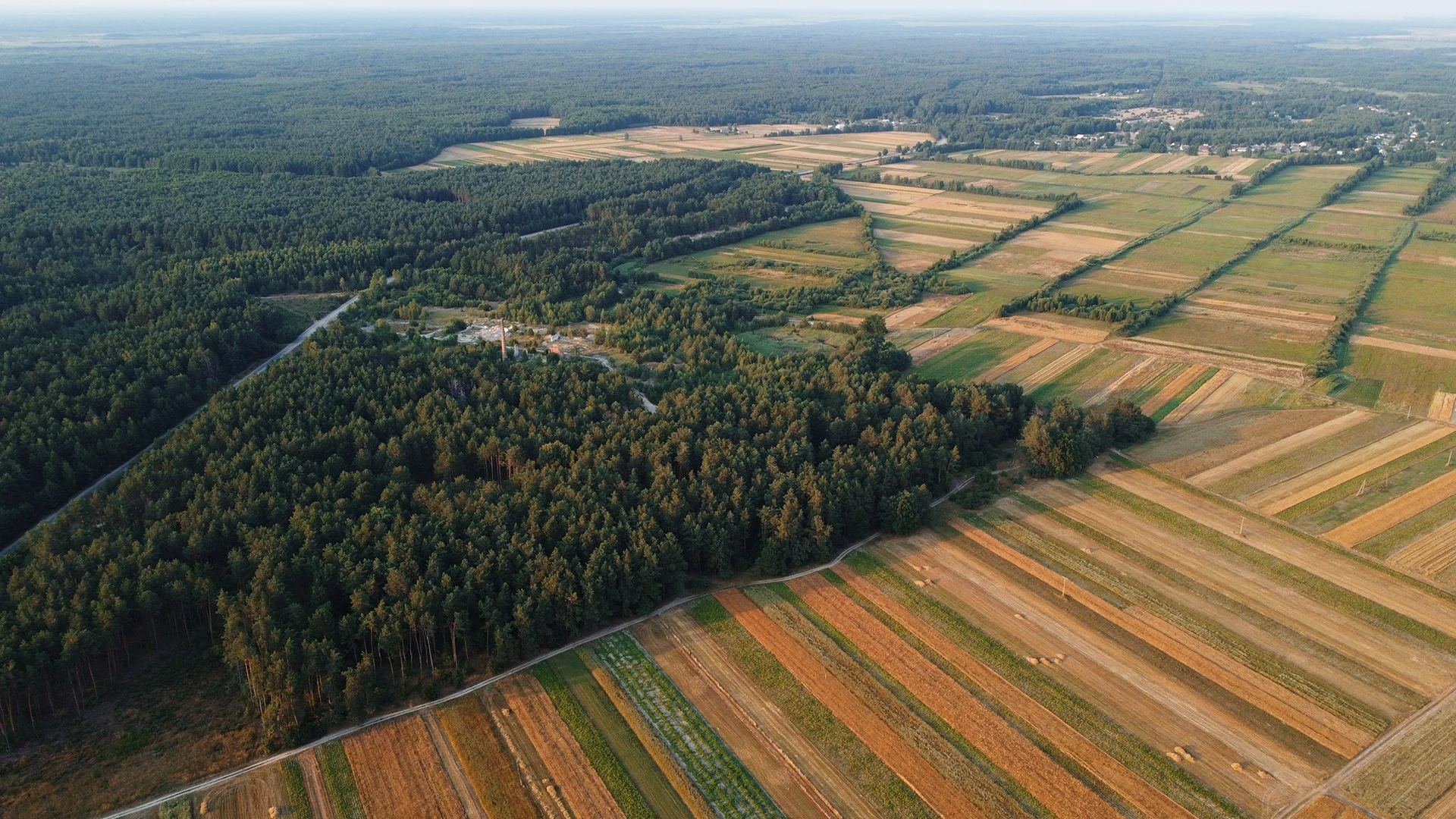
How many acres do I need to cover on average per year?
A mulcher definitely has wear and tear and requires maintenance (regardless of type or brand). Therefore, it is essential to have a likely idea of the size of the area on which you will have to work. Heavier, more intensive use will probably lead to a more technical choice for a mulcher with certain characteristics. Otherwise, “lighter” or more standardized use might mean a different choice, perhaps cheaper and with different prerogatives.
Do I have plumbing with additional drainage pipe?
The drain line (also known as the “low-pressure drain line”) is a dedicated line that allows the equipment’s hydraulic motor, as in the case of many trenchers, to drain excess oil directly into the reservoir, without creating back pressure.
It is critical for all piston engines, as the absence of this line can lead to premature hydraulic motor failure.
To check this, simply observe whether the excavator has a third connection or a special pipe set up for drainage.

Do I need a lighter, more versatile mulcher or a stronger, more durable one?
This question identifies the perfect crasis between the previous two questions. In general, the lightest trenches are also the most versatile, while the strongest trenches focus on prolonged durability.
Can I check the back pressures?
Yes, and it is one of the most important operations before using a mulcher.
This is done by using a pressure gauge connected between the supply and return lines, with the machine running at full speed, but with no equipment under stress.
The maximum recommended back pressure value is 10 bar.
Exceeding this threshold means that the system is not configured correctly, which can cause damage to the hydraulic motor.
Do I have the system with free drainage and return? Can I check its back pressures?
This question immediately invokes others, and it is necessary to pause to provide a more comprehensive explanation. In fact, it is good to expand to three other questions:
- Do I have plumbing with additional drainage pipe?
- Is the procedure for setting up free-drain plumbing known?
- Is it possible to check back pressures?

What kind of vegetation should I work on (grass, brambles, shrubs, stumps)?
If you do not know how to choose a mulcher, you must first ask yourself what you will have to work with: grass, brambles, shrubs, stumps, plant residues, of various kinds, and so on. In fact, among the different types of mulchers, there are those that are best suited depending on the “material” to be processed. A grass mulcher, for example, may not always be adapted to stumps and branches of a certain size. Knowing the type of vegetation to be processed, therefore, is an important feature by which to purchase the most correct mulcher for the application. Hammer mulchers or knife mulchers? It really depends on the work to be done.
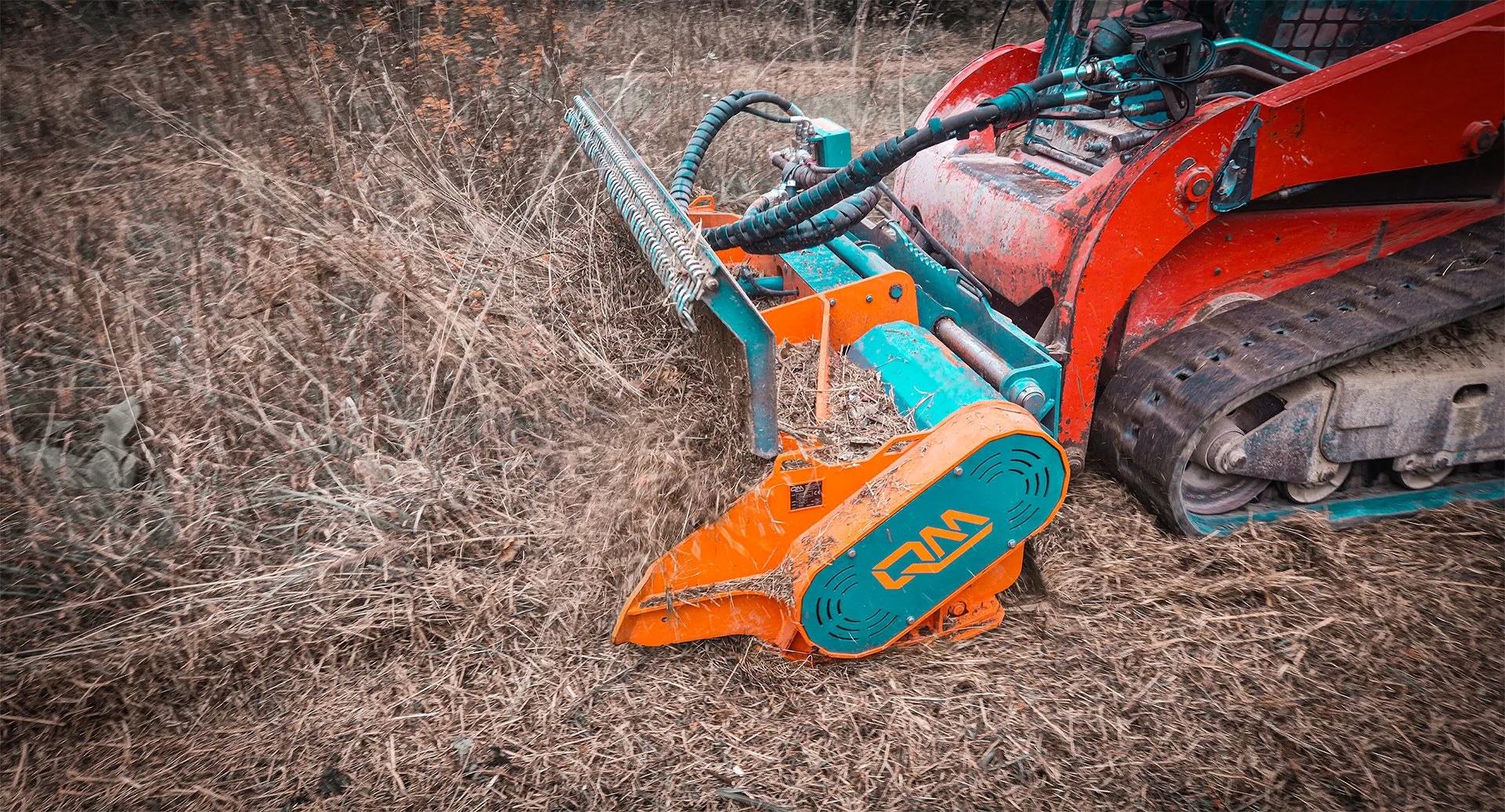
What frequency of use do I anticipate (occasional or professional)?
The previous question is immediately echoed by this one, which should be asked before choosing an excavator mulcher: how often will the mulcher be used? If of occasional or occasional use, it will be easier to opt for a simple piece of equipment, perhaps hobby-level or otherwise easy to handle. In the case of frequent use (such as for a maintenance or agricultural company), on the other hand, it will be necessary to purchase a professional mulcher, made of sturdy and special materials.
Do I know the procedure for setting up free-drain plumbing?
Most trenchers require a system configured for free discharge, i.e., allowing the return flow to discharge directly into the tank, without back pressure.
This configuration must be set up before connecting the hydraulic lines.
The procedure varies with the machine:
- Models with manual valves: to open the direct flow to the tank, it is necessary to manually operate the taps.
- Models with on-board computer: select the dedicated program (e.g., “hammer,” “continuous flow,” etc.) according to what is indicated within the machine’s operating manual.
Incorrect configuration can affect the efficiency of the mulcher and cause damage to the engine.

Do I have reliable service or spare parts for this machine and direct advice for proper purchase?
If you still don’t know how to choose an excavator mulcher, the solution comes with the last of the seven questions. No less important than everything expressed so far is service and parts service. The mulcher enables one job that is often in preparation for another more complex one. With that in mind, it is most important to stay within the estimated time frame and operate efficiently. Here, then, is the fact that in case of problems, it is necessary to solve them as soon as possible.
Let’s start with an assumption: buying an excavator mulcher can be easy or difficult, depending on the answers to the seven questions above. In addition, getting the wrong type of mulcher would not only mean risking sudden failure, but also failing to get the job done as planned, lengthening lead times and resorting to closer maintenance.
Conclusion
Having a service department that is quick, courteous, easy to reach and inclined toward communication could be a motivation for choosing one mulcher over another.
QM, for example, has long had a sure and certain strength in its service department, responding to the customer quickly and providing immediate solutions, thanks in part to the availability of original and quality spare parts.